Sailboat Racing
How I Won Beer Can Races With the Slowest Boat
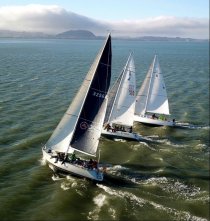
I am writing this to help you win club races. I raced them for about 10 years. I also raced one design but that is a different story. In the beer can races I had the slowest boat but that didn't stop me from occasionally crossing the line first and always crossing ahead of all but the fastest boats. The slowest boat can still win if it sails the shortest distance.
Along the way I improved and want to share what I learned. My style is not for the professional sailor and isn't what you have read about in books on racing. In fact it is quite different in many ways, but it worked and I think it is worth sharing.
My handicap is 153. The other boats in the class had handicaps between 75 and 147. In other words, I had the slowest boat. But on a typical race, the boats with handicaps in the 70's would usually have elapsed times less than mine and the boats with handicaps 99 to 147 would be behind me. I won on corrected time in about 2/3 of the races I entered.
You may ask how that is possible if I had the slowest boat, and the secret is I didn't sail as far. I did not race like the other boats. I did not start like them, I did not round marks like them, and I did not sail like them. I was also much more cautious. My boat is wood and it is my baby. I don't want to hurt her. It is not really a baby because if it was human, it would qualify for Social Security.
Analysis of A Tack (using GPS)
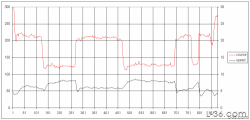
The upwind leg is the leg of interest. We are analyzing the third from the last tack before the mark rounding.
Basics of Sailboat Raceing
Finding Target Boat Speed to Windward
How to Point Higher
I have been racing at SPYC for 5 years and that represents almost all my racing experience. I am thankful to the club for this experience and it has helped me a great deal to become a better racer. I am also grateful to other skippers who are far better racers than I will ever be for sharing many insights and tips on sailing. While I do not consider myself an expert racer, I would like to continue the tradition...
Leeway
Small Things Big Wins
Starting
This is the first of a series of articles on using GPS devices to get to the line on time going fast.
Velocity Headers
Papoose Dismasted
 What can I say. My boat was run down and dismasted.
How to Fly a Spinnaker
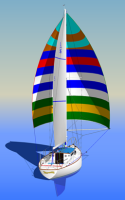 This 8 page tutorial covers all the terms, positions, and tasks of flying a symmetric spinnaker using the end for end gybe technique.
I have had Papoose for 23 years and never used a spinnaker on her. Last two seasons we won the local beer can series using a free flying jib downwind sometimes along with our normal jib. But we always had to play catch up to the boats that used spinnakers. I decided to learn to fly a spinnaker so we could move to the next level.
I joined the crew of a very successful Tarten-10 for the winter series. I used a GoPro camera to document as much as I could. This training series of articles is the result.
Lazy Lightning (the T-10) uses end for end gybes which are said to be appropriate for boats up to 35 feet. It is much simpler to rig and execute than a dip pole gybe so is the preferred method for boats such as mine which fly smaller spinnakers.
Racing with a Whisker Pole
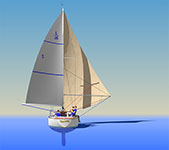 Most sailors have whisker poles to hold a jib out to weather. Not that many use them in racing as a spinnaker is the preferred sail for racing downwind. But not everyone wants to use a spinnaker and some of us race in classes that do not allow spinnakers. Over the years we on Papoose have tried to prefect using a whisker pole while racing.
What I am about to discuss conflicts with the instructions you will find for using a whisker pole. The conventional methods assume you are not racing and are not helpful if you are. Cursers can furl the jib, set the pole, and then unfurl the jib to the pole. To remove the pole, they can furl the jib back up. A racer would not want to do this even if they could but there is no reason a cruiser has to either if you know some of the tricks discussed in this article.
TP52 Samba Pa Ti
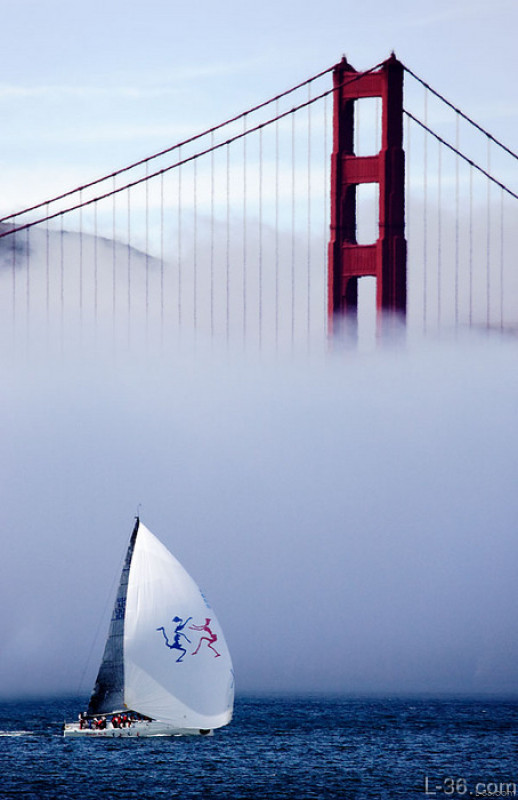
TP52s Racing
Racing Resources
NOTICE: Some pages have affiliate links to Amazon. As an Amazon Associate, I earn from qualifying purchases. Please read website Cookie, Privacy, and Disclamers by clicking HERE. To contact me click HERE. For my YouTube page click HERE