Marine Weather and Tide Forecast for St. George, AK
 | Sunrise 9:15 AM Sunset 6:11 PM Moonrise 4:21 PM Moonset 10:26 AM |
Marine Forecasts
NOTE: Zones updated 4/16/2026. Some zones changed. Use Edit if needed.
PKZ414 Bering Sea Offshore East Of 171w- 254 Pm Akdt Tue Oct 27 2026
.gale warning Wednesday night - .
Tonight - SW wind 15 to 30 kt. Seas 9 to 13 ft. Rain.
Wed - W wind 10 to 25 kt. Seas 9 ft.
Wed night - S wind 15 to 30 kt becoming se 25 to 40 kt after midnight. Seas 7 to 11 ft. Rain.
Thu - S wind 25 to 35 kt. Seas 8 to 16 ft.
Thu night - SW wind 20 to 35 kt. Seas 13 to 21 ft.
Fri - W wind 20 to 35 kt. Seas 15 to 23 ft.
Sat - NW wind 20 to 35 kt. Seas 12 to 20 ft.
Sun - SE wind 20 to 35 kt. Seas 8 to 13 ft.
PKZ400
No data
No data
7 Day Forecast for Marine Location Near St. George, AK

NEW! Add second zone forecast
FXAK68 PAFC 280035 AFDAFC
Southcentral and Southwest Alaska Forecast Discussion National Weather Service Anchorage AK 435 PM AKDT Tue Oct 27 2026
.SHORT TERM FORECAST SOUTHCENTRAL ALASKA (Days 1 through 3/Tonight through Friday)...
A high amplitude upper level ridge is sitting overhead of Southcentral. This led to an ideal fog set-up this morning, with areas of dense fog from Anchorage to the NW Kenai Peninsula and down Turnagain Arm to Portage. Secondarily, there was also some fog in the Copper Valley. The fog has been slowly eroding through the afternoon hours, with abundant sunshine across Southcentral and much of the Gulf and Kodiak Island. There will be little change in conditions tonight, so the most likely scenario is a repeat of this morning, with areas of dense fog redeveloping - most likely in the same general areas.
The upper ridge will be pushed slowly eastward toward Canada on Wednesday through Wednesday night as a short-wave trough and surface frontal system approach from the Bering Sea. The models continue to trend slower and weaker with these features, with the upper level short-wave lifting up the ridge toward the Interior.
As a result, the bulk of precipitation Wednesday night/Thursday will be from Kodiak to the western Kenai and Susitna Valley, with lighter and shorter duration of precipitation for the eastern Kenai, Anchorage, and Mat Valley.
While the upper short-wave exits northward on Thursday and the surface front dissipates, southerly upslope flow will strengthen out ahead of the next Bering sea storm. This will lead to increasing precipitation rates along the southeastern Kodiak Island, southern Kenai Peninsula, and western to northern Susitna Valley. While precipitation type will mainly be in the form of rain, will need to keep an eye on the northern to western Susitna Valley, where conditions will initially be cold enough for snow.
A strong front (and accompanying atmospheric river aloft) will then arrive from the Bering Thursday night and slowly march eastward through Friday. While there is some uncertainty in timing of the front, confidence is high (80%) in heavy rain for coastal areas and the Cook Inlet to Susitna Valley corridor, with snow level rising to 2000 (Susitna Valley) to 3500 feet (Kenai Peninsula and Prince William Sound) by Friday afternoon. As is typical with a strong front, southeasterly gap winds will develop ahead of the front, including Turnagain Arm and the Copper River Valley. While there will be some low level downslope flow, any drying will be overcome by very moist southerly flow and strong upward vertical motion aloft.
-SEB
.SHORT TERM FORECAST SOUTHWEST ALASKA/BERING SEA/ALEUTIANS (Days 1 through 3)...
A Bering front is generating a swath of low stratus and fog to the Pribilof Islands and much of the Aleutian Islands this afternoon. A period of rain and gale force winds associated with the front are expected to push east overnight and into the coast of Southwest Alaska. A strong ridge over mainland Alaska will stall the front over coastal Southwest and the Alaska Peninsula Wednesday morning. An exception is the Kuskokwim Delta, which will see continued gusty south to southwesterly winds as high as 55 mph tonight into tomorrow morning. The stronger winds will be driven by a shortwave trough lifting along and reinforcing the front over the region. Due to the persistent southerly flow and higher tides, elevated water levels (1 to 2 feet above the normal highest tide line) are expected along the Kuskokwim Coast. A high surf advisory remains in effect through 10 AM on Wednesday morning while a wind advisory is in effect for the Kuskokwim Delta from 10 PM tonight through 10 AM tomorrow.
By the end of the week, a large low associated with the remnants of Ex-Typhoon Champi moves into the Bering. This low has a high likelihood of bringing storm force and gale force winds to the Aleutians, as well as continued south to southwest flow to the Kuskokwim Delta both Thursday and Friday. The tide cycle will peak through the end of the week resulting in higher water levels for the Kuskokwim Delta Coast, especially on Friday. While exact water levels are still being determined, current thinking is for potential water levels between 1 and 3 ft above the normal highest tide line for Kipnuk and Kwigillingok. Stay tuned for any updates as the track of the low could change.
-SS
.LONG TERM FORECAST (Days 4 through 7: Saturday through Tuesday)...
Very little change from the previous long term discussion. The long term looks to be remain active, particularly for the Bering Sea, Aleutian Chain, and Southwest Alaska locations. By Saturday, the global models are in fairly good agreement and depict ex- Typhoon Champi merging with another strong low pressure system and becoming a large, deep, and occluded low pressure system moving eastward across the Bering (and weakening as it does so) with its front quickly entering the Gulf of Alaska on Saturday. As the front nears the Gulf coast, expect coastal ridging and a return of gap winds for Southcentral for the Turnagain Arm, Knik River Valley, and Copper River Basin for the weekend, possibly lingering into the first part of next week. As mentioned, the surface low will be weakening as it moves inland into Southwest Alaska, with strong northwesterly gap winds becoming a common theme for the Central and Eastern Aleutians by Saturday morning. Pattern recognition suggests that one place to watch will be Cold Bay, as northwest winds can be especially enhanced through the gap there.
Expect gap winds elsewhere to be elevated, but generally decreasing in intensity through the favored bays and passes of the Alaska Peninsula through Sunday morning.
Models are in somewhat better agreement today regarding a secondary low pressure system situated off the Kamchatka Peninsula and moving into the Bering late Sunday into early Monday morning.
Though there is a better consensus today than yesterday, there is still quite a bit of spread on this system as the GFS remains the much more bullish/stronger solution while other model guidance continues to struggle resolving this system in terms of intensity and positioning. 850 mb temperature anomalies suggest that temperatures stay at or above average through the end of the long term for the both the west and east.
-AM
AVIATION
PANC...Mostly VFR conditions and light winds will persist until late this evening. Fog is likely to redevelop overnight, bringing conditions down to IFR-LIFR. Similar to today, fog is expected to lift by the late morning to early afternoon hours tomorrow. Late in the TAF period, there is a threat for marginal LLWS as southeast winds begin to increase aloft ahead of an incoming frontal system. However, the confidence for LLWS to develop by the afternoon tomorrow remains fairly low, as it appears some model solutions could be overdoing the intensity for the initial push of low level southeasterly winds.
| Airport | Dist | Age | Wind kt | Vis | Sky | Weather | Air | DewPt | RH | inHg |
Link to 5 hour of 5 minute data for 5NV
Terminal Aerodrome Forecast (TAF) for 5NV
Wind History Graph: 5NV
(wind in knots)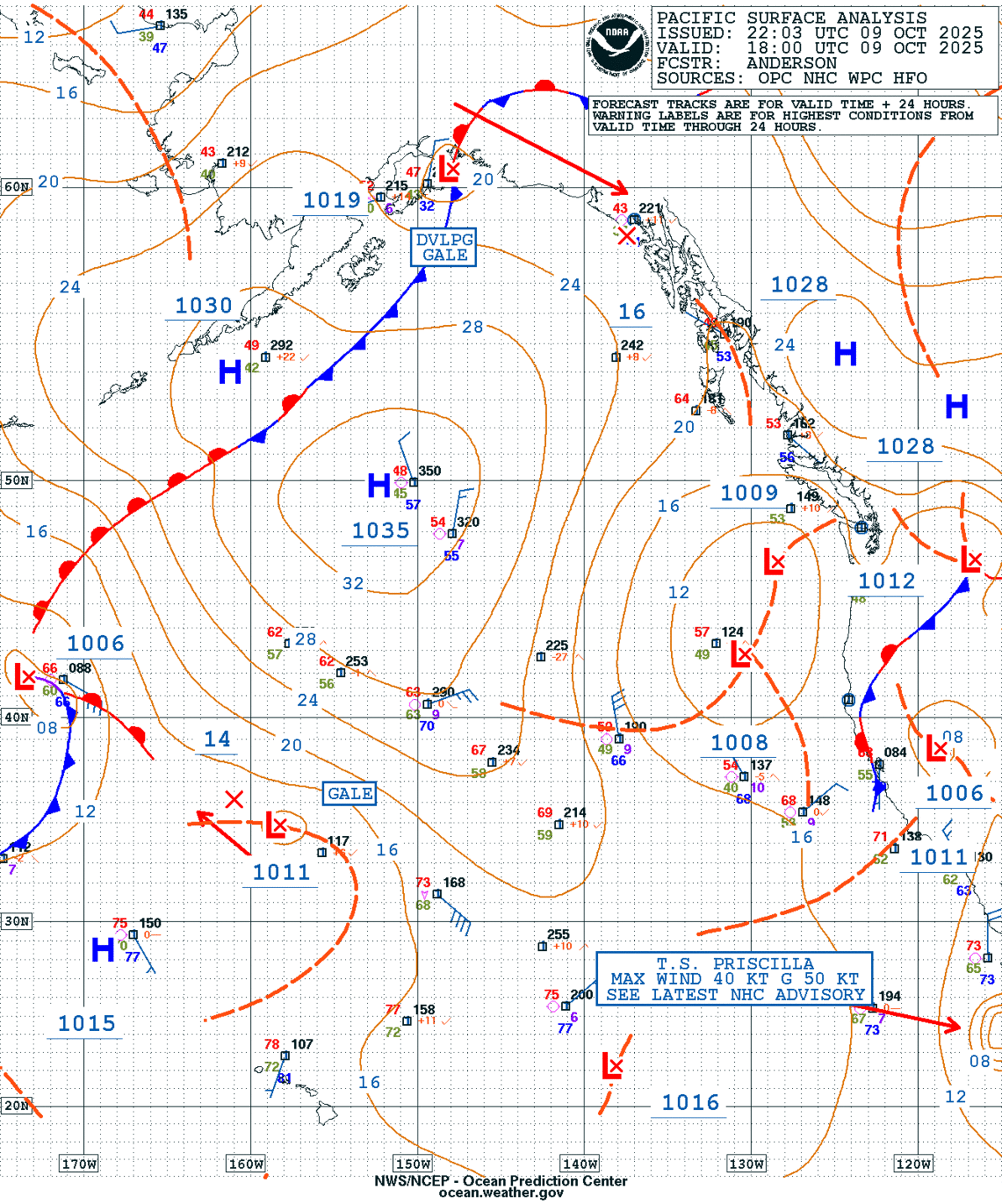
GEOS Local Image of Alaska
Edit Hide

Bethel/Anchorage,AK

NOTICE: Some pages have affiliate links to Amazon. As an Amazon Associate, I earn from qualifying purchases. Please read website Cookie, Privacy, and Disclamers by clicking HERE. To contact me click HERE. For my YouTube page click HERE
X